5 Signs Your Body Is Lacking Iron (And Exactly What to Eat)
5 Signs Your Body Is Lacking Iron (And Exactly What to Eat)
Iron deficiency is the most common nutritional deficiency in the world — and women are the most affected. Yet most
women don't even realise they have it.
They just feel tired. All the time.
---
Why Iron Matters
Iron is essential for making haemoglobin — the protein in red blood cells that carries oxygen throughout your body.
When iron is low, your organs and muscles don't get enough oxygen. Everything slows down. You feel it in every part of
your day.
---
5 Warning Signs You Might Be Iron Deficient
You're exhausted no matter how much you sleep
This is the most common and most ignored sign. If you wake up tired, feel drained by midday, and struggle to get
through basic tasks — low iron is a likely cause. Your cells simply aren't getting enough oxygen to produce energy.
You feel dizzy or get headaches frequently
When oxygen supply to the brain drops, it responds with dizziness, lightheadedness, and persistent headaches —
especially when you stand up quickly.
Your skin looks pale or washed out
Healthy red blood cells give skin its colour and glow. Iron deficiency reduces red blood cells, leaving skin looking
pale, dull, and lifeless — particularly visible on the face, inner eyelids, and nails.
Your hair is falling out more than usual
Hair follicles need a constant supply of oxygen-rich blood to grow. Low iron starves them, causing increased shedding,
thinning, and slow regrowth. This is extremely common in women — especially after pregnancy.
You feel cold all the time
If you're always reaching for a blanket while everyone else is comfortable, poor circulation from iron deficiency
could be the reason. Low iron affects your body's ability to regulate temperature properly.
---
Who Is Most at Risk?
Women with heavy periods
Pregnant or postpartum women
Women following vegetarian or vegan diets
Those eating low protein, high tea/chai diets (tannins in tea block iron absorption)
Teenage girls with poor nutrition
---
Best Foods to Boost Iron Naturally
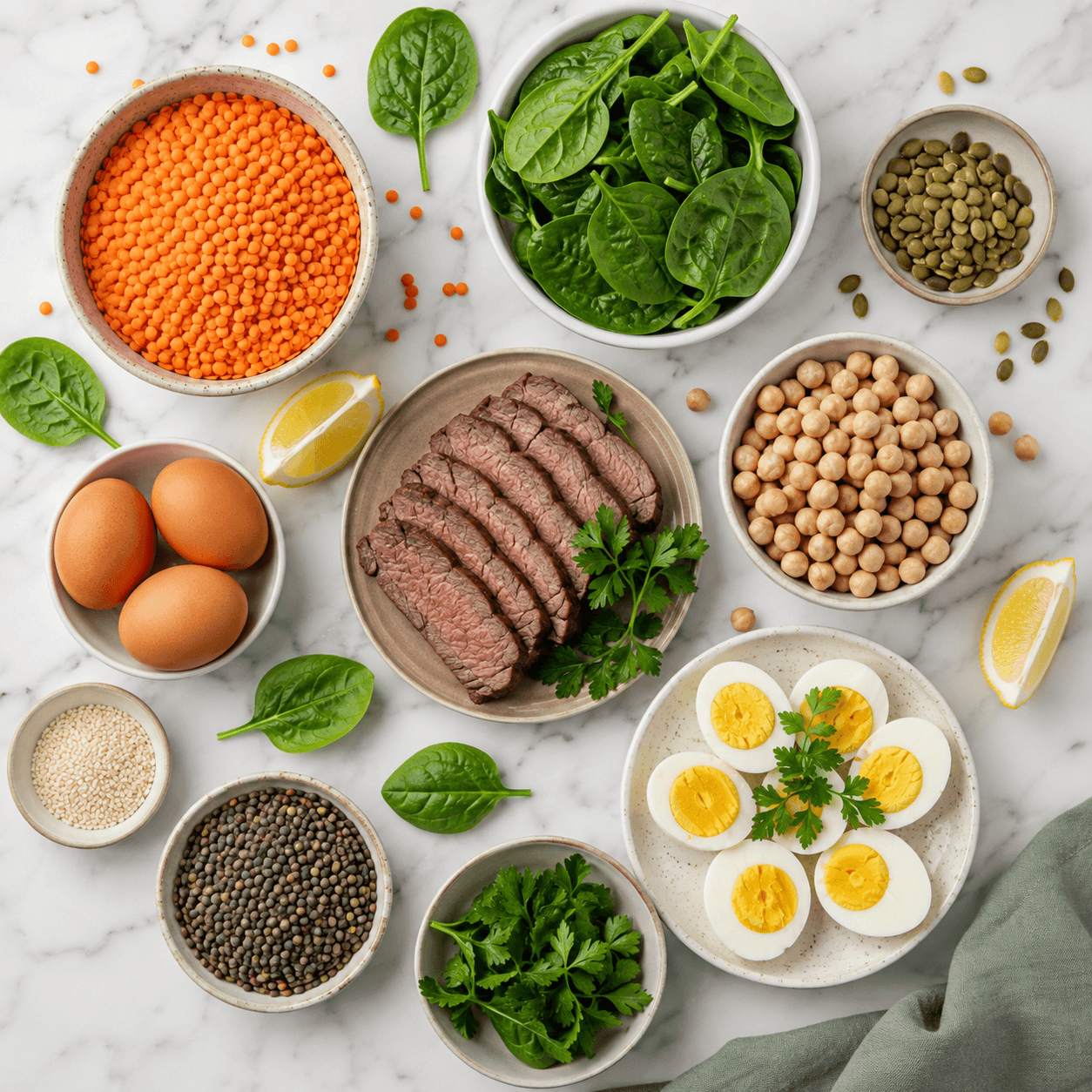
Animal-based iron (absorbs best):
Red meat — beef, lamb
Chicken and turkey (especially dark meat)
Fish and seafood
Eggs (especially yolk)
Plant-based iron:
Lentils (daal) — excellent source
Chickpeas (cholay)
Spinach and dark leafy greens
Pumpkin seeds
Tofu
Fortified breakfast cereals
---
The Most Important Rule: Pair Iron With Vitamin C
Plant-based iron absorbs poorly on its own. Eating it with Vitamin C increases absorption by up to 3x.
Easy combinations:
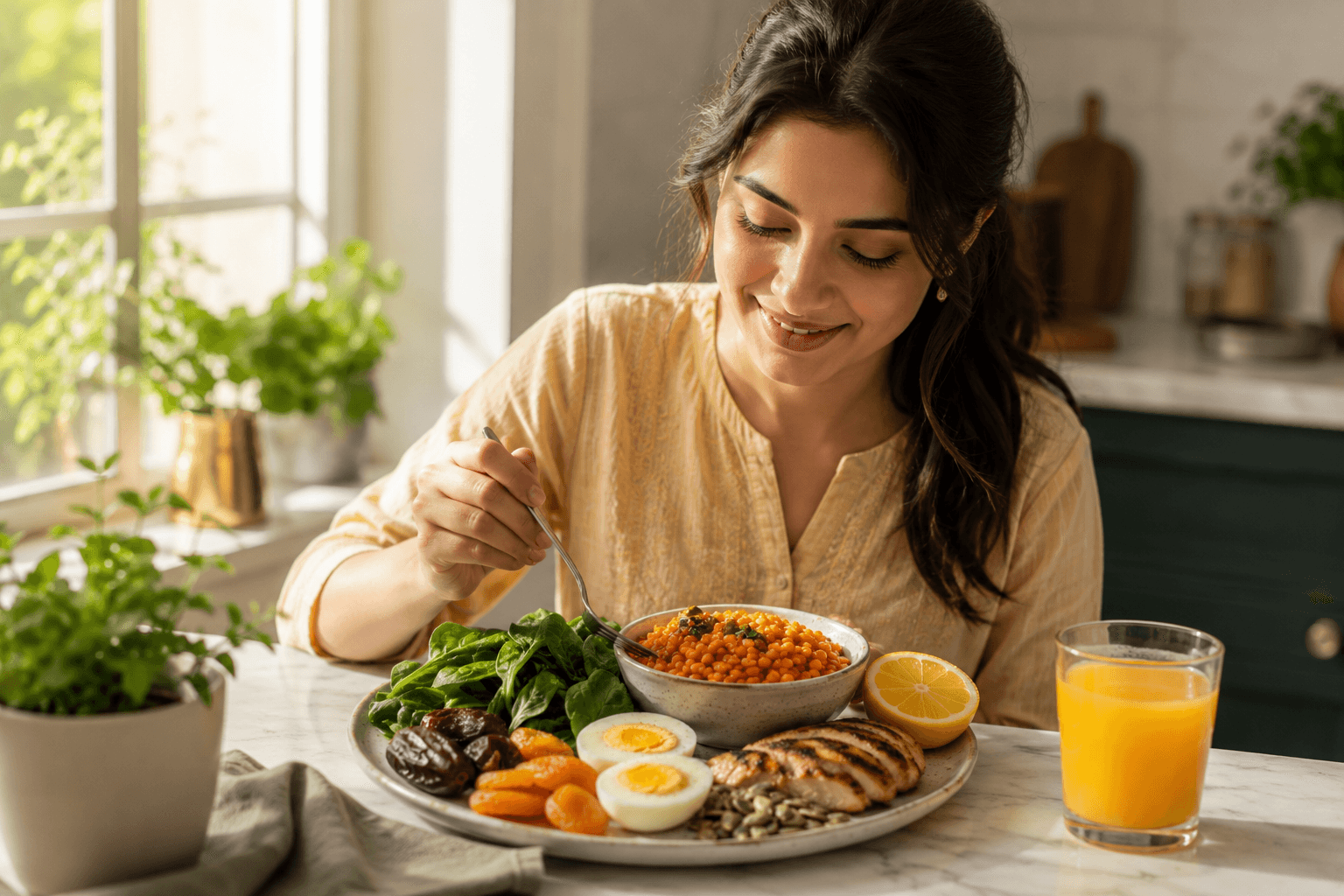
Daal with a squeeze of lemon juice
Spinach salad with tomatoes and orange segments
Chickpeas with raw bell pepper
Iron-fortified cereal with a glass of fresh orange juice
---
What Blocks Iron Absorption
Avoid these within 1–2 hours of eating iron-rich foods:
Tea and coffee — tannins block iron absorption significantly
Calcium-rich foods — milk, yogurt, and cheese compete with iron
Antacids — reduce stomach acid needed to absorb iron
This is why drinking chai immediately after meals is problematic for iron levels — a very common habit that quietly
worsens deficiency over time.
---
Should You Take Iron Supplements?
Only if confirmed by a blood test. Taking iron supplements without a deficiency can cause constipation, nausea, and
other issues.
Get a simple blood test (CBC + serum ferritin) to check your levels before supplementing. If deficiency is confirmed,
supplements combined with dietary changes work fastest.
Tags