Iron Deficiency in Women — Signs You Are Low on Iron and How to Fix It Through Diet
Fatigue that never goes away no matter how much you sleep. A constant feeling of coldness. Headaches that come and go.
Feeling breathless after climbing stairs. Looking pale even when you feel fine.
If any of these sound familiar, there is a very good chance you are iron deficient.
Iron deficiency is the single most common nutritional deficiency in the world — and women are affected far more than
men. In Pakistan alone, studies suggest that over 50% of women of reproductive age are iron deficient. Yet most women
live with it for years without knowing because the symptoms are easy to dismiss as just being tired or stressed.
---
Why Women Are More Vulnerable to Iron Deficiency
Women lose iron every month through menstruation. The more heavy your periods are, the more iron you lose. Pregnancy
increases iron requirements dramatically because your body needs to supply iron to the growing baby. Breastfeeding
also depletes iron stores.
On top of this, many women in South Asia follow diets that are heavy in wheat and rice but low in iron-rich animal
foods. Plant-based iron is also much harder for the body to absorb than animal-based iron, making deficiency even more
likely.
---
The Difference Between Iron Deficiency and Anemia
These two terms are often confused but they are not the same thing.
Iron deficiency means your body's iron stores are low but you have not yet reached the point of anemia. You may still
feel symptoms but a basic blood test might appear borderline normal.
Iron deficiency anemia is the more advanced stage where iron stores are so depleted that your body cannot produce
enough healthy red blood cells to carry oxygen properly.
Both conditions require attention. Iron deficiency without anemia is more common and often goes undiagnosed for long
periods.
---
Warning Signs of Iron Deficiency in Women
Persistent fatigue and weakness
This is the most common symptom. Iron helps carry oxygen in the blood. When iron is low, less oxygen reaches your
muscles and brain — leaving you feeling exhausted even after a full night of sleep. This is a different kind of
tiredness — it does not go away with rest.
Pale skin and pale inner eyelids
One of the easiest ways to check for iron deficiency at home — pull down your lower eyelid and look at the inner rim.
If it is pale pink or white instead of deep red, this can indicate low iron levels.
Shortness of breath
Feeling breathless after light activity like climbing stairs or walking quickly is a sign your blood is not carrying
enough oxygen to meet your body's demands.
Cold hands and feet
Poor circulation caused by low iron means extremities do not get enough blood flow, leaving hands and feet constantly
cold even in warm weather.
Headaches and dizziness
Low oxygen supply to the brain causes frequent headaches and lightheadedness — especially when standing up quickly.
Hair fall
As mentioned — iron deficiency is one of the leading causes of hair fall in women. Hair follicles need iron to
function and grow.
Brittle nails
Nails that break easily, have ridges or develop a spoon-shaped curve called koilonychia are a classic sign of iron
deficiency.
Cravings for ice, dirt or starch
This unusual symptom called pica — craving non-food items like ice, clay or raw rice — is surprisingly common in iron
deficient women and is a strong indicator of severe deficiency.
Restless legs at night
An uncomfortable urge to move the legs at night, especially in bed, is strongly associated with low iron levels.
Brain fog and difficulty concentrating
Iron deficiency affects cognitive function — making it hard to focus, remember things or think clearly.
---
How to Diagnose Iron Deficiency
Do not self-diagnose based on symptoms alone. Get a blood test that includes:
Serum ferritin — this is the most sensitive marker of iron stores. A normal hemoglobin does not rule out iron
deficiency if ferritin is low.
Complete blood count (CBC)
Serum iron and total iron binding capacity (TIBC)
Many doctors only check hemoglobin which can appear normal even when iron stores are depleted. Always ask specifically
for serum ferritin.
---
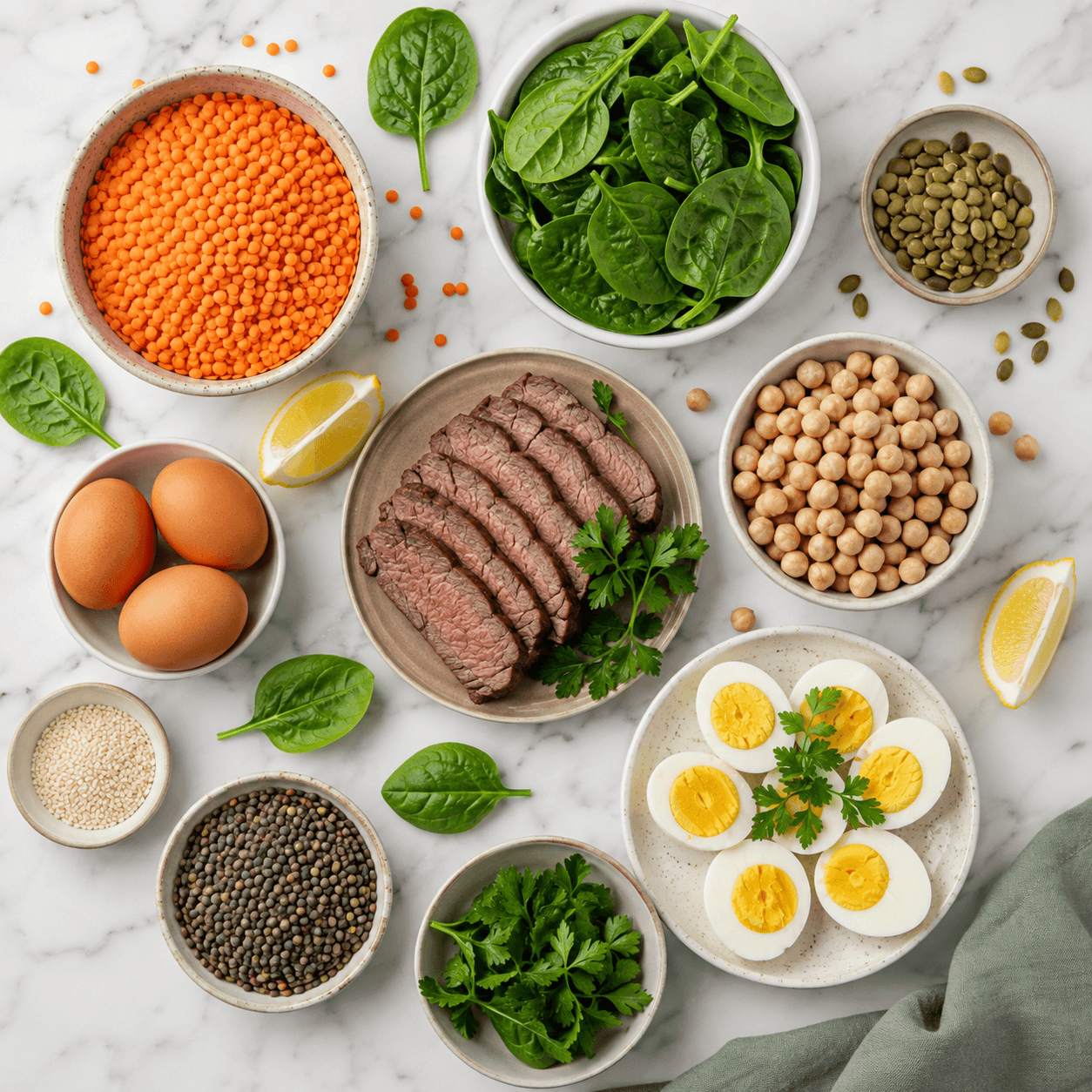
Best Iron-Rich Foods to Eat Daily
Iron comes in two forms — heme iron from animal sources which is absorbed much more efficiently, and non-heme iron
from plant sources which is harder to absorb but still valuable.
Best animal sources of iron (heme iron):
Red meat — beef and lamb are the richest sources
Chicken — especially dark meat and liver
Fish and seafood
Chicken liver — one of the most iron-dense foods available
Eggs
Best plant sources of iron (non-heme iron):
Lentils and daal — a daily staple that is excellent for iron
Chickpeas and kidney beans
Spinach and dark leafy greens
Pumpkin seeds
Sesame seeds and tahini
Dried apricots and dates
Fortified cereals and breads
Tofu
---
The Secret to Absorbing More Iron — Vitamin C
This is the most important nutrition tip for iron deficiency that most people do not know.
Vitamin C dramatically increases the absorption of non-heme plant iron — by up to 3 times. This means simply adding a
source of Vitamin C to your iron-rich meals can make a huge difference.
Practical ways to combine iron with Vitamin C:
Squeeze lemon juice over your daal or spinach
Add tomatoes to your lentil dishes
Eat an orange after a meal rich in plant iron
Add capsicum or bell peppers to your food
Drink a small glass of fresh orange juice with your meal
---
Foods and Habits That Block Iron Absorption
Just as important as what you eat is what you avoid around mealtimes:
Tea and coffee — the tannins in tea and coffee significantly reduce iron absorption. Avoid drinking tea for at least
1 hour before and after meals
Calcium-rich foods — milk, dairy and calcium supplements compete with iron for absorption. Do not take iron
supplements with a glass of milk
Phytates — found in whole grains and legumes. Soaking and cooking these foods reduces phytate content and improves
iron absorption
Antacids and certain medications — can interfere with iron absorption. Speak to your doctor if you take regular
medication
---
Should You Take Iron Supplements?
If your blood test confirms iron deficiency, your doctor may recommend iron supplements. This is appropriate and
sometimes necessary for faster recovery.
However iron supplements should always be taken under medical supervision because:
Too much iron can be harmful
Iron supplements cause constipation and stomach discomfort in many people
The dose and type of supplement matters
Food-based iron is preferable for mild deficiency
Never start iron supplements without getting tested first.
---
How Long Does It Take to Recover?
With proper dietary changes and supplementation if prescribed, most women start feeling better within 4 to 8 weeks.
However fully restoring iron stores in the body can take 3 to 6 months of consistent effort.
The key is consistency — both in eating iron-rich foods daily and avoiding habits that block absorption.
---
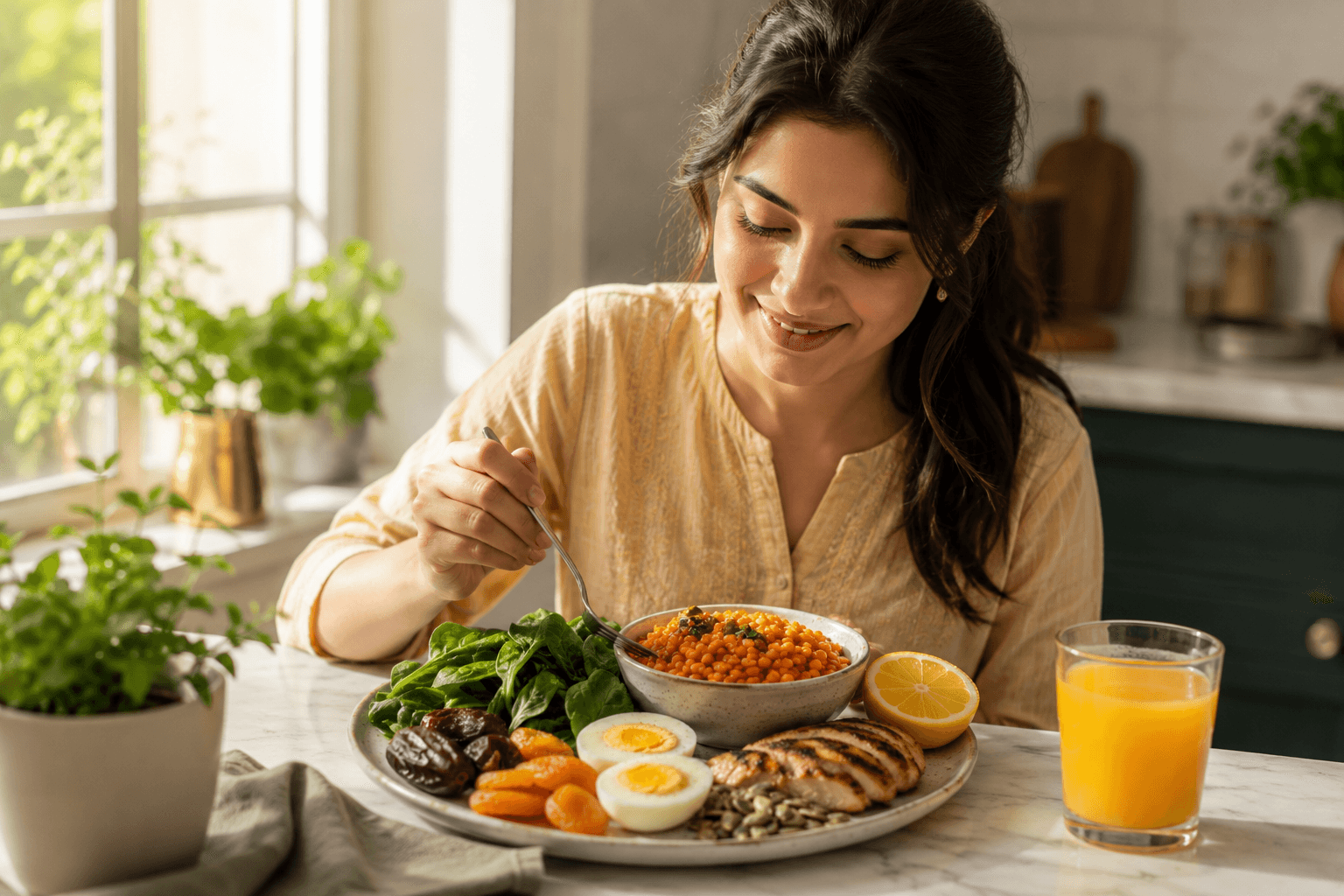
A Sample Day of Iron-Rich Eating
Breakfast:
Eggs on whole grain toast with a glass of fresh orange juice
Mid-morning:
A handful of pumpkin seeds and dried apricots
Lunch:
Daal with spinach, roti and a side of tomato salad with lemon dressing. Avoid chai immediately after.
Dinner:
Chicken or beef curry with vegetables and brown rice
Before bed:
A small handful of almonds or dates
---
The Bottom Line
Iron deficiency is incredibly common in women yet incredibly under-diagnosed. The symptoms are easy to dismiss but the
impact on your energy, hair, mood, concentration and overall quality of life is significant.
If you have been feeling persistently tired, cold or weak — get your ferritin levels checked. It is a simple blood
test that could explain everything.
And remember — your diet is your most powerful tool. Eat iron-rich foods daily, combine them with Vitamin C, avoid tea
around mealtimes and give your body the time it needs to recover.
Tags