PCOS Meal Plan — A Full Day of Eating for Hormone Balance
If you have PCOS, you already know how confusing eating can feel. One source tells you to go keto. Another says go
vegan. Meanwhile you are sitting with a plate of daal chawal wondering if this is even allowed.
The truth is — there is no single perfect PCOS diet. But there are clear principles that research consistently
supports. And when you combine those principles with South Asian food culture, you get a meal plan that is both
effective and actually enjoyable to follow.
In this guide I am sharing a complete full day PCOS meal plan designed specifically for South Asian women — with real
desi food options that support hormone balance, reduce inflammation and manage insulin resistance.
Understanding PCOS and Food
Before the meal plan, it helps to understand why food matters so much with PCOS.
Most women with PCOS have some degree of insulin resistance — meaning their cells do not respond well to insulin. This
causes the body to produce more insulin, which in turn triggers the ovaries to produce more androgens (male hormones
like testosterone). This hormonal imbalance causes most PCOS symptoms — irregular periods, acne, hair loss, weight
gain and difficulty losing weight.
The right nutrition strategy targets insulin resistance directly. When insulin levels stabilise, androgen levels drop,
and many PCOS symptoms improve significantly.
Key principles for a PCOS diet:
Low glycaemic index carbohydrates — slow release, no blood sugar spikes
High fibre — slows glucose absorption
Adequate protein — keeps you full, stabilises blood sugar
Anti-inflammatory foods — reduce chronic inflammation linked to PCOS
Healthy fats — support hormone production
Now let us put this into a real day of eating.
Full Day PCOS Meal Plan
Breakfast — 8:00 AM
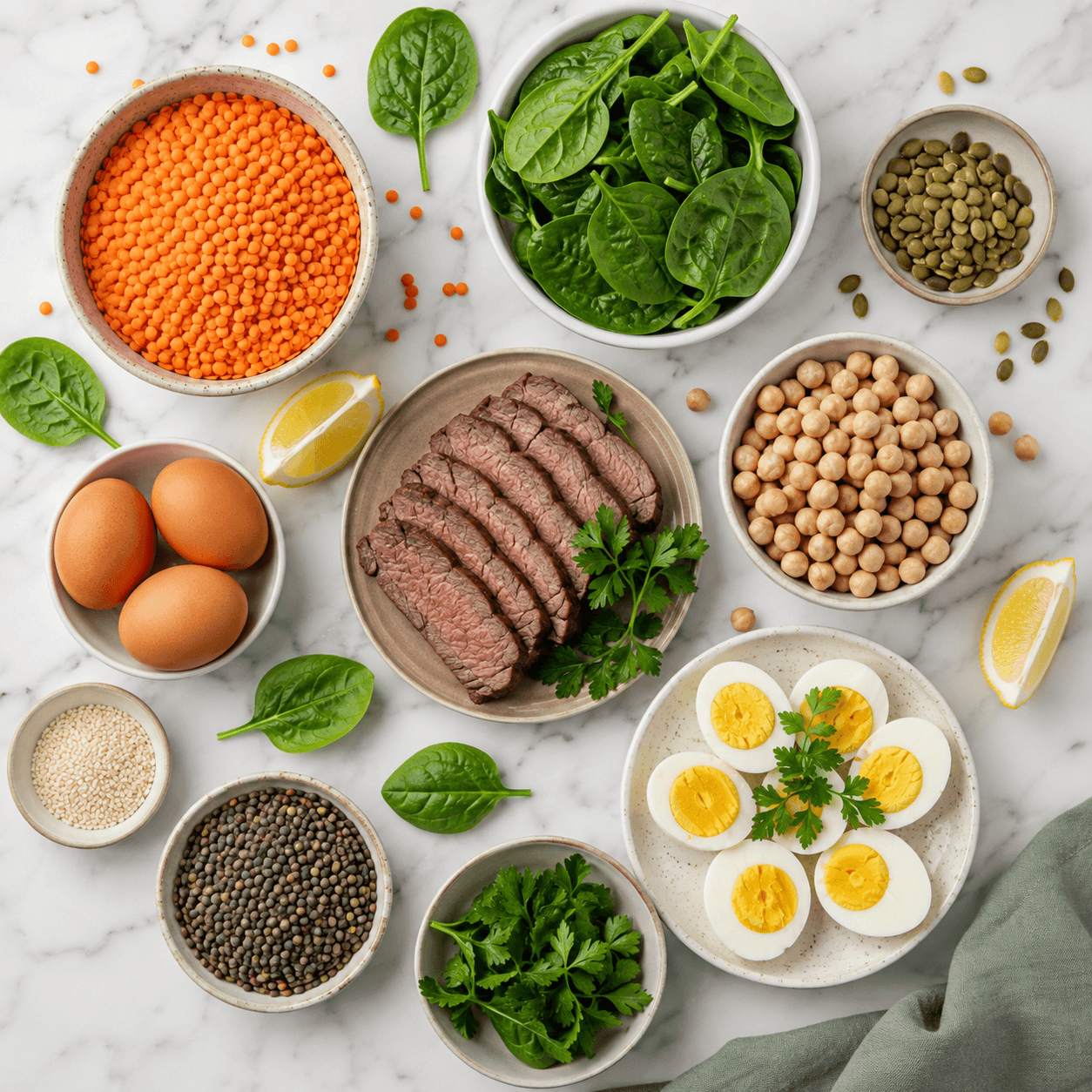
Option 1 — Eggs with Vegetables
2 boiled or scrambled eggs cooked in ½ tsp olive oil or ghee
Sautéed spinach (palak) or tomatoes with cumin
1 whole wheat roti
1 cup green tea or herbal tea (no sugar)
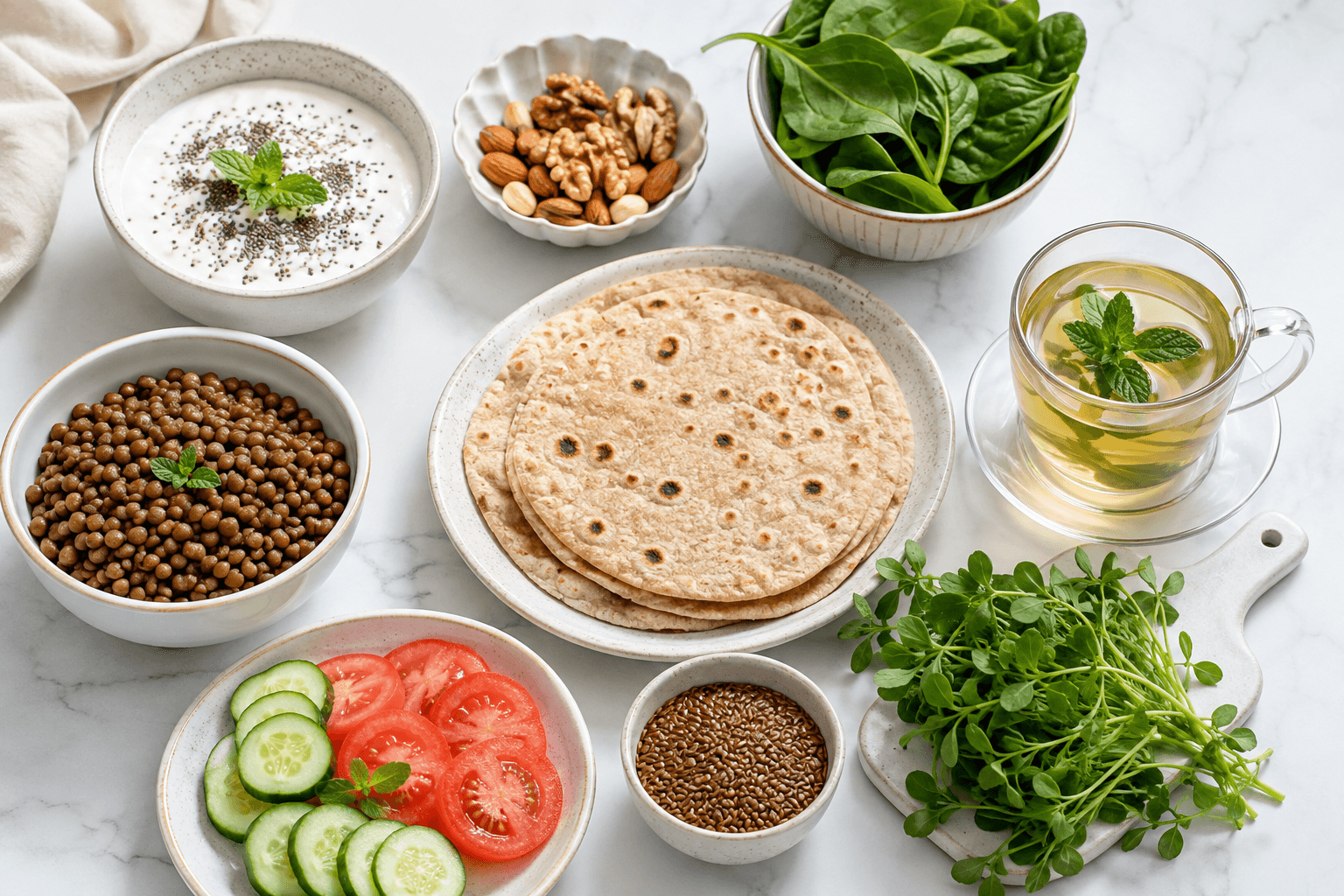
Option 2 — Dahi with Seeds
1 cup plain unsweetened dahi (yoghurt)
1 tbsp chia seeds or flax seeds stirred in
A small handful of mixed nuts (almonds, walnuts)
1 small apple or pear
Why this works: Eggs and dahi are high in protein which prevents blood sugar spikes in the morning. Adding seeds
provides omega-3 fatty acids and fibre that support hormone balance. Starting with protein rather than carbohydrates
is one of the most important changes PCOS women can make.
Avoid for breakfast: Paratha with butter, sugary chai with biscuits, white bread, packaged cereals, fruit juice —
all of these spike insulin rapidly first thing in the morning.
---
Mid-Morning Snack — 11:00 AM
Option 1
A small handful of mixed nuts — almonds, walnuts, pumpkin seeds
1 cup green tea or spearmint tea (spearmint has been shown to reduce androgen levels in PCOS)
Option 2
1 small apple or pear with 1 tbsp almond butter
Herbal tea
Why this works: A small snack between breakfast and lunch prevents blood sugar from dropping too low, which
reduces cravings and overeating at lunch. Nuts provide healthy fats that are essential for hormone production.
---
Lunch — 1:00 PM
Option 1 — Daal Sabzi Plate
1 cup masoor or moong daal (cooked with minimal oil, onion, tomato, spices)
1 cup mixed sabzi — bhindi, tinda, tori or gobhi
1 to 2 whole wheat rotis
Small salad — cucumber, tomato, onion with lemon
Option 2 — Chana with Salad
1 cup chana masala (chickpeas cooked with spices, minimal oil)
Large green salad with olive oil and lemon dressing
1 whole wheat roti
Option 3 — Chicken with Vegetables
1 medium piece grilled or baked chicken (not fried)
1 cup mixed sabzi
1 whole wheat roti or small portion of brown rice
Why this works: Lunch is your largest meal of the day with PCOS. Combining protein (daal, chana or chicken), fibre
(vegetables and whole grain) and healthy fats creates a perfectly balanced plate that keeps insulin stable for hours.
This is the anti-PCOS formula in action.
---
Afternoon Snack — 4:00 PM
Option 1
1 boiled egg
A few cucumber or carrot sticks
Option 2
Small bowl of roasted chana (unsalted)
1 cup herbal or green tea
Option 3
Small handful of walnuts and a few dates (not more than 2 dates)
Why this works: Afternoon is when cravings hit hardest for most PCOS women. A protein and fibre snack at 4pm
prevents evening overeating and stabilises energy levels so you are not exhausted by 6pm.
---
Dinner — 7:00 PM
Option 1 — Light Protein Dinner
Grilled or baked fish (rohu, tilapia) with lemon and spices
1 cup sautéed spinach or mixed vegetables
Small portion of brown rice or 1 whole wheat roti
Option 2 — Soup and Roti
Large bowl of homemade vegetable soup with lentils (thick and filling)
1 whole wheat roti
Small side salad
Option 3 — Egg Curry
2 egg curry (cooked in minimal oil with tomato onion gravy)
1 cup mixed sabzi
1 whole wheat roti
Why this works: Dinner should be lighter than lunch and eaten before 8pm if possible. Eating late at night
disrupts insulin sensitivity and sleep quality — both of which worsen PCOS symptoms. Keep dinner moderate in
carbohydrates and higher in protein and vegetables.
Avoid at dinner: Heavy biryani, fried food, excessive rice, heavy creamy curries, sweets or mithai. These spike
insulin at night when your metabolism is slower.
---
Before Bed — Optional
1 cup warm turmeric milk (haldi doodh) made with unsweetened milk and a pinch of turmeric, cinnamon and black pepper
This is anti-inflammatory and supports sleep quality
---
Foods to Include Every Week for PCOS
Beyond the daily meal plan, make sure these foods appear regularly in your weekly diet:
Methi (Fenugreek): Use fresh methi as sabzi or soak methi seeds overnight and drink the water in the morning.
Fenugreek improves insulin sensitivity and supports menstrual regularity.
Karela (Bitter Gourd): Excellent for blood sugar control. Even 2 to 3 times per week makes a difference.
Flax Seeds: Add to dahi, smoothies or sprinkle on food. Rich in lignans that help balance oestrogen levels.
Turmeric: Use generously in cooking. Curcumin in turmeric reduces chronic inflammation which worsens PCOS.
Spearmint Tea: Research shows 2 cups daily can reduce testosterone levels in women with PCOS. A simple but
powerful addition.
Walnuts: Rich in omega-3 fatty acids and anti-inflammatory compounds. A small handful daily is enough.
Foods to Reduce or Avoid with PCOS
Refined carbohydrates — maida, white bread, naan, biscuits, crackers
Sugary drinks — soft drinks, packaged juices, sweetened chai
Dairy in excess — some women with PCOS are sensitive to dairy. Monitor how it affects your symptoms
Processed and fried foods — samosa, pakora, chips, fast food
Excess sugar — mithai, chocolate, sugary desserts
Alcohol — worsens hormonal imbalance significantly
Important Lifestyle Habits Alongside Diet
Diet alone is powerful but works best with these habits:
Sleep 7 to 8 hours — poor sleep worsens insulin resistance dramatically
Walk 30 minutes daily — even light walking significantly improves insulin sensitivity
Manage stress — chronic stress raises cortisol which worsens PCOS. Try deep breathing, light yoga or walking in
nature
Do not skip meals — skipping meals causes blood sugar crashes and increases cravings
A Note on Consistency
No meal plan works overnight. PCOS responds to consistent dietary habits over 8 to 12 weeks. You will not see hormonal
changes in one week — but you will likely feel more energetic, less bloated and more in control of your cravings
within the first 2 to 3 weeks.
The goal is not perfection. If you have biryani at a family dinner, that is okay. What matters is what you eat most of
the time — not occasionally.
Final Thoughts
PCOS is a condition you can manage effectively through the right nutrition. You do not need expensive supplements,
extreme diets or to give up all desi food. You need a balanced, sustainable approach that works with your culture and
your lifestyle.
This meal plan is a starting point. Every woman with PCOS is different — your hormones, your symptoms, your lifestyle
and your food preferences are unique to you. A personalised PCOS nutrition plan takes all of this into account.
If you are struggling with PCOS symptoms and want a meal plan designed specifically for your body and your needs, I am
here to help.
Book a PCOS nutrition consultation today — and take the first step toward balanced hormones and better health.
---
Read Time:
8 min read
Featured:
Yes
---
Facebook Post:
Struggling with PCOS and confused about what to eat?
Here is a complete full day PCOS meal plan designed for South Asian women — real desi food, real results.
Breakfast, lunch, dinner and snacks — all PCOS friendly and actually delicious.
New blog is live — link in bio
#PCOS #PCOSDiet #HormoneBalance #WomensHealth #SouthAsianHealth #NutritionTips #sjNuorish #PCOSAwareness #DesiHealth
Tags