
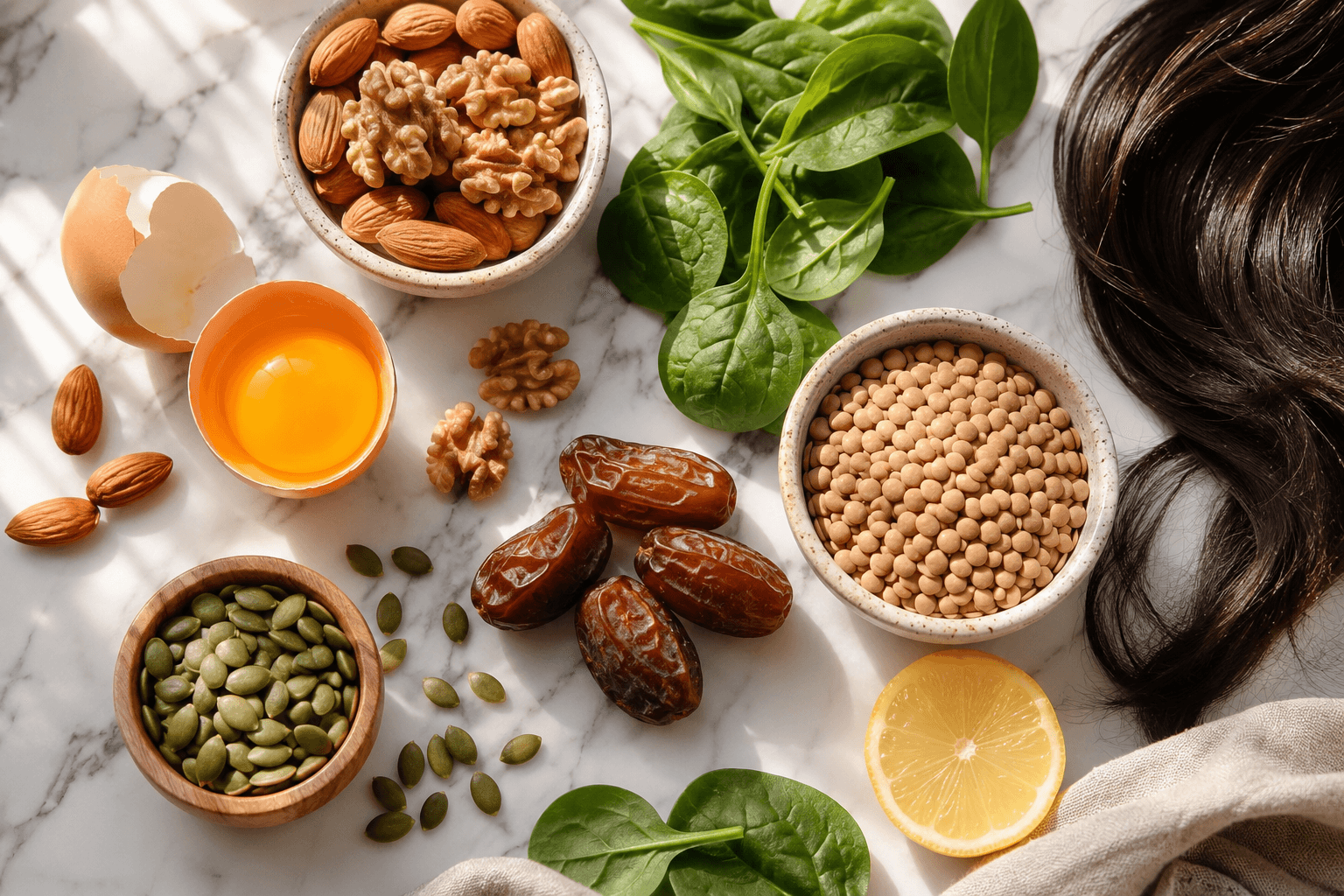
Why Your Hair is Falling Out — The Nutritional Reasons Nobody Talks About
Finding clumps of hair on your pillow, in the shower drain, or on your hairbrush is one of the most distressing things
a woman can experience. The first reaction is usually to buy an expensive shampoo, try a new hair oil, or visit a
dermatologist.
But here is what most people do not know — the majority of hair fall in women is not a hair problem at all. It is a
nutrition problem.
Your hair follicles are among the most metabolically active cells in your body. They need a constant and adequate
supply of nutrients to grow, maintain strength and complete their normal growth cycle. When your body is deficient in
key nutrients, it redirects resources away from hair — because hair is not essential for survival — and toward more
critical functions like heart, brain and organ function.
The result is hair fall, thinning and slow regrowth.
---
The Most Common Nutritional Causes of Hair Fall
Iron Deficiency — The Number One Cause
Iron deficiency is the single most common nutritional reason for hair fall in women — especially in Pakistan, India
and other South Asian countries where dietary iron intake is often low.
Iron is essential for producing hemoglobin, which carries oxygen to your hair follicles. Without enough oxygen, hair
follicles enter a resting phase and hair begins to fall out excessively. This type of hair loss is called telogen
effluvium.
Signs you may be iron deficient:
Hair fall that seems sudden or excessive
Fatigue and weakness
Pale skin
Shortness of breath
Cold hands and feet
Brittle nails
Best iron-rich foods to eat:
Red meat — beef and lamb are the richest sources
Chicken and fish
Lentils, beans and chickpeas
Dark leafy greens like spinach
Pumpkin seeds
Dates and apricots
Important tip — pair iron-rich foods with Vitamin C sources like lemon, tomatoes or oranges to significantly improve
iron absorption. Avoid tea or coffee immediately after meals as they block iron absorption.
---
Protein Deficiency
Your hair is made almost entirely of a protein called keratin. If you are not eating enough protein, your body does
not have the raw material to build new hair strands. Hair growth slows down and existing hair becomes weak, brittle
and more prone to falling.
This is especially common in women who follow very low calorie diets, skip meals or avoid meat and dairy without
replacing protein through other sources.
Signs of protein deficiency related to hair:
Hair that breaks easily
Thin and limp hair
Slow hair growth
Hair that lacks shine
Best protein sources for hair health:
Eggs — one of the best foods for hair, rich in protein and biotin
Chicken, fish and red meat
Lentils and legumes
Greek yogurt and cottage cheese
Nuts and seeds
Aim for at least 0.8 to 1 gram of protein per kilogram of your body weight daily.
---
Biotin (Vitamin B7) Deficiency
Biotin is one of the most talked-about nutrients for hair health and for good reason. It plays a direct role in
keratin production and hair follicle health. Biotin deficiency causes noticeable hair thinning and loss.
However genuine biotin deficiency is less common than iron or protein deficiency. If you eat a balanced diet with
eggs, nuts and whole grains you are likely getting enough biotin.
Best biotin-rich foods:
Eggs — especially egg yolks
Almonds and walnuts
Sweet potato
Salmon and sardines
Sunflower seeds
Whole grains
---
Zinc Deficiency
Zinc is essential for hair tissue growth and repair. It also keeps the oil glands around hair follicles working
properly. Low zinc levels are directly linked to hair loss and a dry, flaky scalp.
Signs of zinc deficiency:
Hair fall combined with slow wound healing
Frequent infections
Loss of taste or smell
White spots on nails
Best zinc-rich foods:
Pumpkin seeds — one of the richest plant sources
Beef and lamb
Chickpeas and lentils
Cashews
Dairy products
---
Vitamin D Deficiency
Vitamin D plays a surprising role in hair follicle cycling. Research shows that low Vitamin D levels are associated
with alopecia — a condition causing patchy hair loss. Vitamin D receptors are found directly in hair follicles,
meaning this vitamin directly influences hair growth.
Given that Vitamin D deficiency is extremely common — affecting up to 80% of people in South Asia — this is a very
relevant cause of hair fall that often goes undetected.
Get your Vitamin D levels checked through a simple blood test. If deficient, supplementation under medical supervision
and regular sunlight exposure can make a significant difference.
---
Crash Dieting and Extreme Calorie Restriction
One of the most overlooked causes of sudden hair fall is rapid weight loss through crash dieting. When you drastically
reduce calories, your body goes into survival mode and shuts down non-essential functions — including hair growth.
This type of hair fall typically appears 2 to 3 months after a period of extreme dieting which is why many women do
not immediately connect it to their diet.
If you have recently lost weight quickly and are now experiencing hair fall, nutrition is almost certainly the cause.
---
What to Do If You Are Experiencing Hair Fall
Step 1 — Get a blood test
Ask your doctor to check your iron, ferritin, Vitamin D, zinc and complete blood count. This will identify exactly
which deficiency is causing your hair fall.
Step 2 — Improve your diet
Focus on eating a balanced diet rich in iron, protein, zinc, biotin and Vitamin D through whole foods. Do not rely
only on supplements — food sources are better absorbed and more sustainable.
Step 3 — Be patient
Hair growth is slow. Even after correcting a nutritional deficiency, it can take 3 to 6 months before you see
noticeable improvement in hair thickness and reduced fall. Consistency is key.
Step 4 — Avoid crash diets
If you want to lose weight, do it slowly and sustainably. Rapid weight loss is one of the fastest ways to trigger
severe hair fall.
Step 5 — Consult a nutritionist
A personalized nutrition plan tailored to your specific deficiencies and health condition is the most effective way to
address hair fall through diet.
---
Foods to Eat Daily for Healthy Hair
Eggs — protein and biotin
Spinach — iron, folate, Vitamin A and C
Lentils and daal — iron, protein and zinc
Almonds and walnuts — biotin, Vitamin E and zinc
Chicken or fish — high quality protein
Sweet potato — beta carotene which converts to Vitamin A
Pumpkin seeds — zinc and iron
Citrus fruits — Vitamin C to boost iron absorption
---
Foods to Avoid
Excessive tea and coffee — blocks iron absorption
Sugary and processed foods — cause inflammation affecting hair follicles
Crash diet plans that severely restrict calories
Alcohol — depletes zinc, iron and B vitamins
---
The Bottom Line
Hair fall is your body sending you a message. Before spending money on treatments, serums and supplements, look at
what you are eating. Most of the time the answer lies in your plate — not in a bottle.
Fix your nutrition, address your deficiencies, and give your body the time it needs to rebuild. Healthy hair starts
from the inside out.
---
Want a personalized nutrition plan that addresses your specific deficiencies and supports healthy hair growth? Book a
consultation with Sara at sjnuorish.com
Tags