
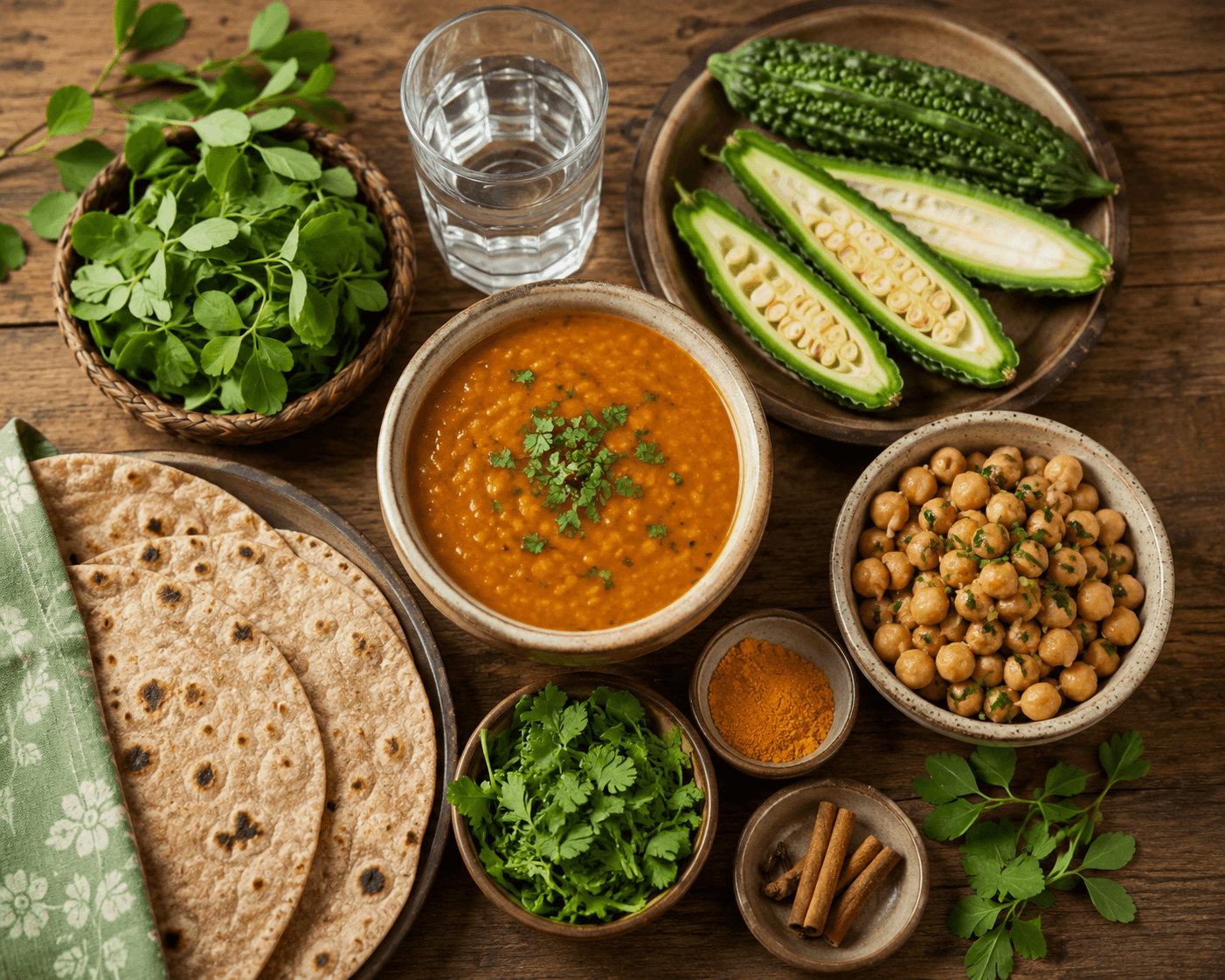
Diabetes-Friendly Pakistani Foods You Can Eat Without Guilt
Living with diabetes in a Pakistani household can feel overwhelming. Every meal feels like a risk — roti, rice,
biryani, mithai — foods that are central to our culture and family life.
But here is the truth: you do not have to give up Pakistani food to manage your blood sugar. You just need to know
which foods work for you and how to eat them smartly.
As a nutritionist specialising in diabetes nutrition for South Asian clients, I have helped many people enjoy their
favourite desi meals while keeping their blood sugar stable. In this guide I will share exactly which Pakistani foods
are diabetes-friendly and why.
Why Pakistani Food and Diabetes Is a Complex Topic
Pakistani cuisine is rich, flavourful and deeply tied to our identity. But many traditional foods are high in refined
carbohydrates, unhealthy fats and sugar — all of which can spike blood glucose levels.
The good news is that Pakistani food also has incredible ingredients that are naturally beneficial for blood sugar
control — lentils, vegetables, spices like turmeric and methi, and protein-rich foods that stabilise glucose levels.
The key is knowing what to eat, what to limit and how to balance your plate.
Diabetes-Friendly Pakistani Foods
1. Daal (Lentils)
Daal is one of the best foods for diabetics. All varieties — masoor, moong, chana, mash — are high in plant-based
protein and soluble fibre. This combination slows down glucose absorption and prevents blood sugar spikes after meals.
Daal also has a low glycaemic index meaning it releases energy slowly and keeps you fuller for longer. Eat it
regularly — it is genuinely one of the most powerful diabetes foods available.
Best choices: Masoor daal, chana daal, moong daal
Tip: Avoid heavy tarka with excessive ghee. Use minimal oil with onion, tomato and spices.
2. Sabzi (Cooked Vegetables)
Pakistani vegetable dishes are excellent for diabetics. Bhindi (okra), karela (bitter gourd), tinda, tori, palak,
methi, gobhi — all of these are low in carbohydrates and high in fibre and nutrients.
Karela (bitter gourd) deserves special mention. It contains compounds that mimic insulin and have been shown in
research to help lower blood sugar levels naturally. Including karela in your diet even 2 to 3 times per week can have
a meaningful impact.
Best choices: Karela, bhindi, palak, methi, tinda, tori, gobhi
Tip: Cook with minimal oil. Dry sabzi cooked with spices is better than gravy-heavy versions.
3. Chana (Chickpeas)
Chana — whether in chana masala, cholay or chaat form — is a superstar food for diabetics. Chickpeas are high in
protein and fibre with a low glycaemic index. They digest slowly, keeping blood sugar stable for hours after eating.
They are also filling, which helps prevent overeating and unnecessary snacking between meals.
Tip: Homemade chana masala with minimal oil is ideal. Avoid adding too much potato as it raises the carbohydrate
load.
4. Roti — Yes, You Can Still Eat It
This is the question every Pakistani diabetic asks — can I still eat roti?
The answer is yes, but with important conditions:
Choose whole wheat roti over maida roti. Whole wheat has more fibre which slows glucose absorption.
Limit portion size — 1 to 2 rotis per meal rather than 3 to 4.
Never eat roti alone — always pair it with daal, sabzi or protein to balance blood sugar response.
Avoid very thin stretchy roti made from refined flour — this raises blood sugar much faster.
Whole wheat roti in controlled portions paired with vegetables and protein is perfectly manageable for most diabetics.
5. Eggs (Anda)
Eggs are one of the best foods for diabetics and fortunately Pakistani cuisine uses them extensively. They contain no
carbohydrates, are high in protein and healthy fats, and have virtually zero impact on blood sugar.
Anda bhurji, boiled eggs, omelette with vegetables — all excellent choices for breakfast or lunch.
Tip: Avoid cooking eggs in excessive oil or butter. A small amount of olive oil or desi ghee in moderation is
fine.
6. Yoghurt (Dahi)
Plain unsweetened dahi is diabetes-friendly. It contains protein and probiotics that support gut health and help
regulate blood sugar. Research shows that regular yoghurt consumption is linked with lower risk of type 2 diabetes.
Best choice: Plain full-fat or low-fat dahi without sugar or artificial flavouring.
Tip: Avoid store-bought flavoured yoghurts — they are loaded with sugar.
7. Fish (Machli)
Fish is excellent for diabetics. It is high in protein and omega-3 fatty acids which reduce inflammation and support
heart health — particularly important since diabetics have higher cardiovascular risk.
Pakistani cuisine includes rohu, tilapia and pomfret which are all great choices.
Tip: Grilled or baked fish with spices is better than heavily fried fish coated in batter.
8. Methi (Fenugreek)
Methi is a traditional Pakistani spice with powerful blood sugar lowering properties. It contains soluble fibre and
compounds that improve insulin sensitivity. Many diabetics in South Asia have used methi for generations — and science
now confirms it works.
You can use methi seeds soaked overnight in water (drink the water in the morning), cook fresh methi leaves as sabzi,
or use dried methi in your curries.
Foods to Limit or Avoid
While many Pakistani foods are diabetes-friendly, some need to be limited:
White rice (chawal) — high glycaemic, spikes blood sugar quickly. Limit to small portions once a day maximum.
Maida (white flour) — naan, paratha, samosa, puri all use maida. These raise blood sugar rapidly. Limit
significantly.
Biryani — white rice cooked with oil and fat. Occasional small portion is okay but not regular.
Mithai and sweets — gulab jamun, kheer, halwa, barfi. These are high sugar and should be avoided or eaten in
very small amounts on rare occasions.
Packaged juices and soft drinks — liquid sugar goes directly into bloodstream. Avoid completely.
Excessive ghee and oil — cooking with too much fat raises calorie intake and contributes to insulin resistance.
How to Build a Diabetes-Friendly Pakistani Plate
A simple formula for every meal:
Half your plate — vegetables (sabzi, daal, salad)
Quarter of your plate — whole grain carbohydrate (whole wheat roti, brown rice in small amount)
Quarter of your plate — protein (eggs, chicken, fish, chana, daal)
This balance ensures slower digestion, stable blood sugar and sustained energy throughout the day.
The Role of Spices in Diabetes Management
Pakistani cooking is rich in spices that have genuine blood sugar benefits:
Turmeric (haldi) — anti-inflammatory, supports insulin sensitivity
Cinnamon (dalchini) — shown in research to lower fasting blood sugar
Methi seeds — improves glucose tolerance
Cumin (zeera) — supports digestion and blood sugar regulation
Garlic (lehsun) — anti-inflammatory and supports cardiovascular health
Use these generously in your cooking. They add flavour and support your health simultaneously.
Final Thoughts
Diabetes does not mean the end of enjoying Pakistani food. It means learning to make smarter choices within the food
culture you love.
With the right knowledge and a personalised plan, you can eat daal, sabzi, whole wheat roti, chana and enjoy your
meals without fear. The goal is not restriction — it is balance.
If you are struggling to manage your blood sugar while eating Pakistani food, a personalised diabetes nutrition plan
can make all the difference. Every person's blood sugar responds differently to food, which is why a one-size-fits-all
approach rarely works.
I work with clients across Pakistan, Canada, UK and UAE to create culturally sensitive diabetes diet plans that fit
your lifestyle, food preferences and medical needs.
Book a consultation today and take control of your blood sugar — without giving up the food you love.
Tags