
Bloating After Every Meal? Here's What Your Body Is Trying to Tell You
Bloating After Every Meal? Here's What Your Body Is Trying to Tell You
Feeling full, tight, and uncomfortable after eating is something millions of people deal with daily — and most just
accept it as normal.
It isn't.
Occasional bloating happens to everyone. But if you're bloating after almost every meal, your body is sending a clear
signal that something needs to change.
---
What Is Bloating Actually?
Bloating is the build-up of gas or fluid in your digestive tract, causing your abdomen to feel full, tight, and
sometimes visibly swollen. It can range from mildly uncomfortable to genuinely painful.
The key question is: why is it happening so consistently?
---
7 Real Reasons You're Bloating After Every Meal
You're eating too fast
When you eat quickly, you swallow large amounts of air along with your food. That air has to go somewhere — and it
causes bloating and gas. Eating fast also means food isn't chewed properly, making digestion much harder.
Fix: Slow down. Aim for at least 20 minutes per meal. Put your fork down between bites.
---
You're eating too much at once
Large portions overwhelm your digestive system. Your stomach stretches, digestion slows, and gas builds up. This is
especially common if you skip meals and then eat a very large meal to compensate.
Fix: Eat smaller, more frequent meals rather than two or three huge ones.
---
You have a sensitivity to certain foods
Some of the most common bloating triggers are foods people eat every day without realising the connection:
Dairy — lactose intolerance is extremely common, even in people who've had no issues before
Wheat and gluten — can cause bloating in sensitive individuals
Onions and garlic — high in FODMAPs (fermentable carbs that feed gut bacteria)
Lentils and beans — healthy but gas-producing, especially if eaten in large amounts
Carbonated drinks — including sparkling water, fizzy drinks, and soda
Fix: Try removing one suspected food for 1–2 weeks and see if symptoms improve.
---
You're drinking water at the wrong time
Drinking large amounts of water during meals dilutes stomach acid and digestive enzymes, slowing digestion and causing
fermentation and gas.
Fix: Drink water 30 minutes before meals, not during. Small sips during eating are fine.
---
Your gut bacteria are imbalanced
Your gut contains trillions of bacteria that help digest food. When bad bacteria outnumber good ones — due to
antibiotics, poor diet, or stress — digestion becomes inefficient and gas production increases significantly.
Fix: Add probiotic foods daily — plain yogurt, kefir, or fermented foods. Reduce sugar and processed foods which feed
harmful bacteria.
---
You're under chronic stress
Your gut and brain are directly connected through the gut-brain axis. When you're stressed or anxious, your digestive
system slows down. Food sits longer in your gut, ferments, and causes bloating.
Fix: Don't eat when you're rushed, stressed, or distracted. Even 5 minutes of calm before eating makes a difference.
---
You're not moving enough after meals
Sitting completely still after eating slows digestion. Gas builds up instead of moving through the digestive tract.
Fix: A short 10–15 minute walk after meals significantly reduces bloating and improves digestion.
---
Foods That Actually Help Reduce Bloating
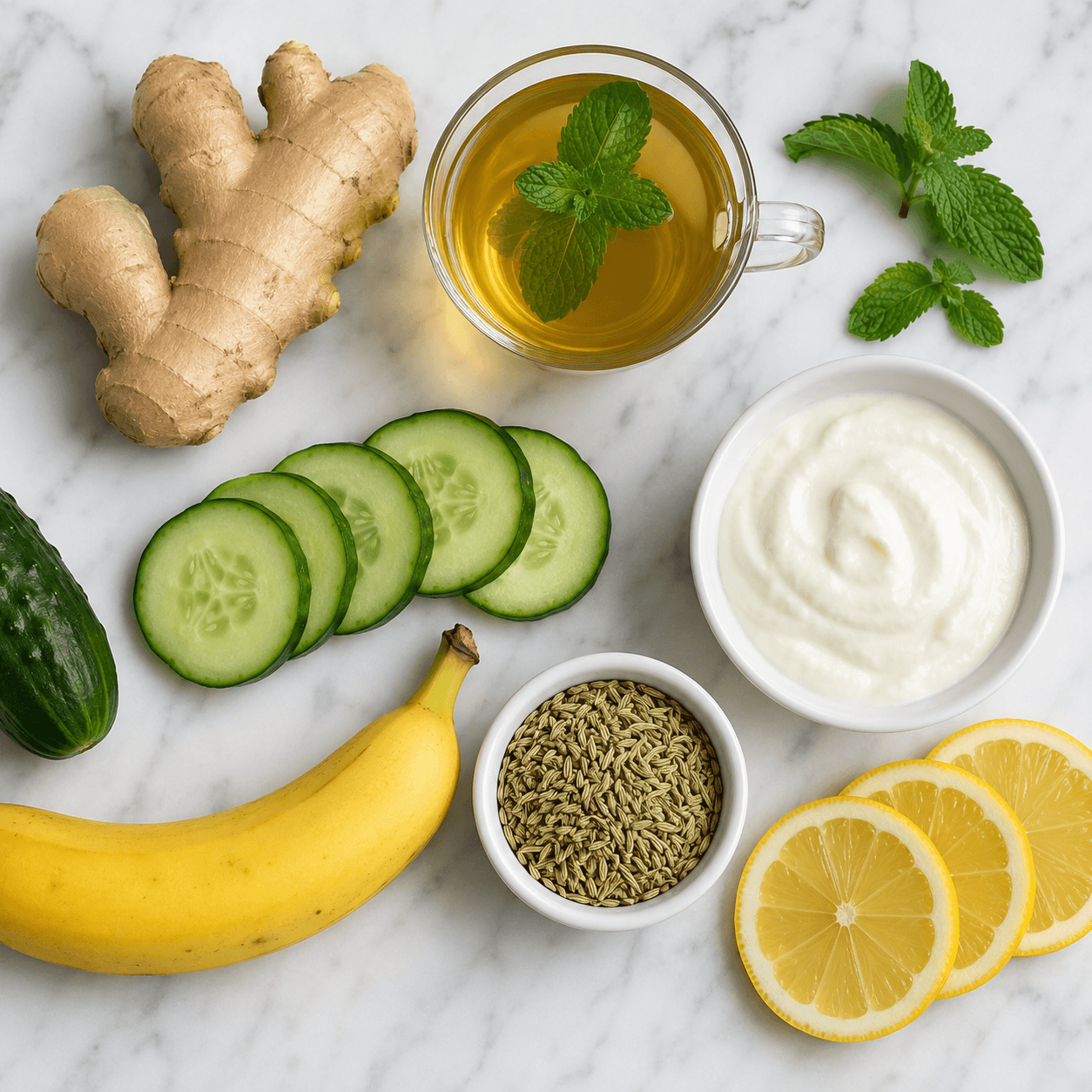
Ginger — one of the most powerful natural digestive aids. Ginger tea after meals works well
Peppermint tea — relaxes the muscles of the digestive tract and reduces gas
Cucumber — high water content, helps reduce fluid retention
Banana — contains potassium which balances sodium and reduces water retention
Plain yogurt — probiotics restore gut bacteria balance
Fennel seeds (saunf) — widely used in South Asian cooking for good reason. Chewing saunf after meals reduces gas and
bloating effectively
---
A Simple Anti-Bloating Day
Morning:
Warm water with lemon on an empty stomach — stimulates digestion
Breakfast:
Plain yogurt with banana and oats — gentle on the gut, probiotic-rich
After lunch:
Short walk + fennel seed tea
Evening:
Light dinner at least 2–3 hours before bed
Avoid all day:
Carbonated drinks, fried foods, raw onion in large amounts
Tags