
How Much Water Should You Actually Drink Per Day? The Truth Beyond 8 Glasses
You have heard it a thousand times — drink 8 glasses of water a day. It is on posters in clinics, mentioned by
doctors, repeated by fitness influencers. But where did this number actually come from? And more importantly, is it
right for your body?
The truth is more nuanced than most people realize.
---
Where Did the 8 Glasses Rule Come From?
The "8x8 rule" — 8 glasses of 8 ounces each — has no strong scientific basis. It originated from a 1945 US Food and
Nutrition Board recommendation that was widely misunderstood. The original recommendation actually included water from
all food and beverages — not just plain water. Somewhere along the way the nuance got lost and "drink 8 glasses of
water" became gospel.
Modern research tells a very different story.
---
What Science Actually Says
According to current research and health organizations:
Men need approximately 3.7 litres (about 15 cups) of total fluid per day
Women need approximately 2.7 litres (about 11 cups) of total fluid per day
But here is the key word — total fluid. This includes water from food, tea, milk, soups and other beverages. Not just
plain water.
In fact around 20% of your daily water intake comes from the food you eat — especially fruits and vegetables like
cucumber, watermelon, tomatoes and oranges.
---
How Much Water YOU Need Depends On These Factors
There is no single correct answer for everyone. Your water needs depend on:
Your body weight
A simple formula — drink 30 to 35 ml of water per kilogram of body weight. So if you weigh 65 kg, you need
approximately 1.95 to 2.3 litres of plain water daily.
Your activity level
If you exercise or sweat heavily you lose significantly more water and need to replace it. Add at least 500ml to 1
litre extra on active days.
Your climate
People living in hot countries like Pakistan or UAE lose much more water through sweat than someone in a cold country.
Hot weather increases your water needs considerably.
Your health condition
Pregnant women need more water. Breastfeeding mothers need even more. People with kidney stones are advised to drink
significantly more. Those with certain kidney or heart conditions may need to limit fluid intake.
What you eat
If your diet is high in fruits, vegetables and soups you are already getting a significant portion of your daily fluid
needs through food.
---
Signs You Are Not Drinking Enough Water
Many people are chronically mildly dehydrated without realizing it. Signs include:
Dark yellow urine — the most reliable indicator
Feeling tired or sluggish for no reason
Headaches, especially in the afternoon
Difficulty concentrating or brain fog
Dry skin or lips
Frequent constipation
Feeling hungry when you just ate — thirst is often mistaken for hunger
Dizziness when standing up quickly
The simplest check — look at your urine. Pale yellow means you are well hydrated. Dark yellow or orange means drink
more water immediately.
---
Can You Drink Too Much Water?
Yes — though it is rare. Drinking excessively large amounts of water in a short period can cause a dangerous condition
called hyponatremia where sodium levels in the blood drop too low. This is more common in endurance athletes who
drink enormous amounts of plain water during long events.
For most people drinking too much water is not a practical concern. But sipping water consistently throughout the day
is far better than forcing yourself to drink large amounts at once.
---
Best Times to Drink Water
Timing your water intake can make a real difference:
First thing in the morning — drink one large glass immediately after waking to rehydrate after sleep
Before meals — drinking water 20 to 30 minutes before eating can reduce hunger and support digestion
During and after exercise — replace fluids lost through sweat
Mid afternoon — the 3pm energy slump is often dehydration, not tiredness
Avoid large amounts with meals — too much water during eating can dilute digestive enzymes
---
Does Tea and Coffee Count?
Yes — contrary to popular belief, tea and coffee do contribute to your daily fluid intake. While caffeine has a mild
diuretic effect, the fluid in tea and coffee still counts toward hydration. However plain water remains the best
source because it has zero calories and no side effects.
Sugary drinks, sodas and juices are not good hydration sources even though they contain water — the sugar and
additives create other problems.
---
Practical Tips to Drink More Water Daily
If you struggle to drink enough water, try these:
Keep a water bottle visible on your desk at all times
Set a reminder on your phone every 2 hours
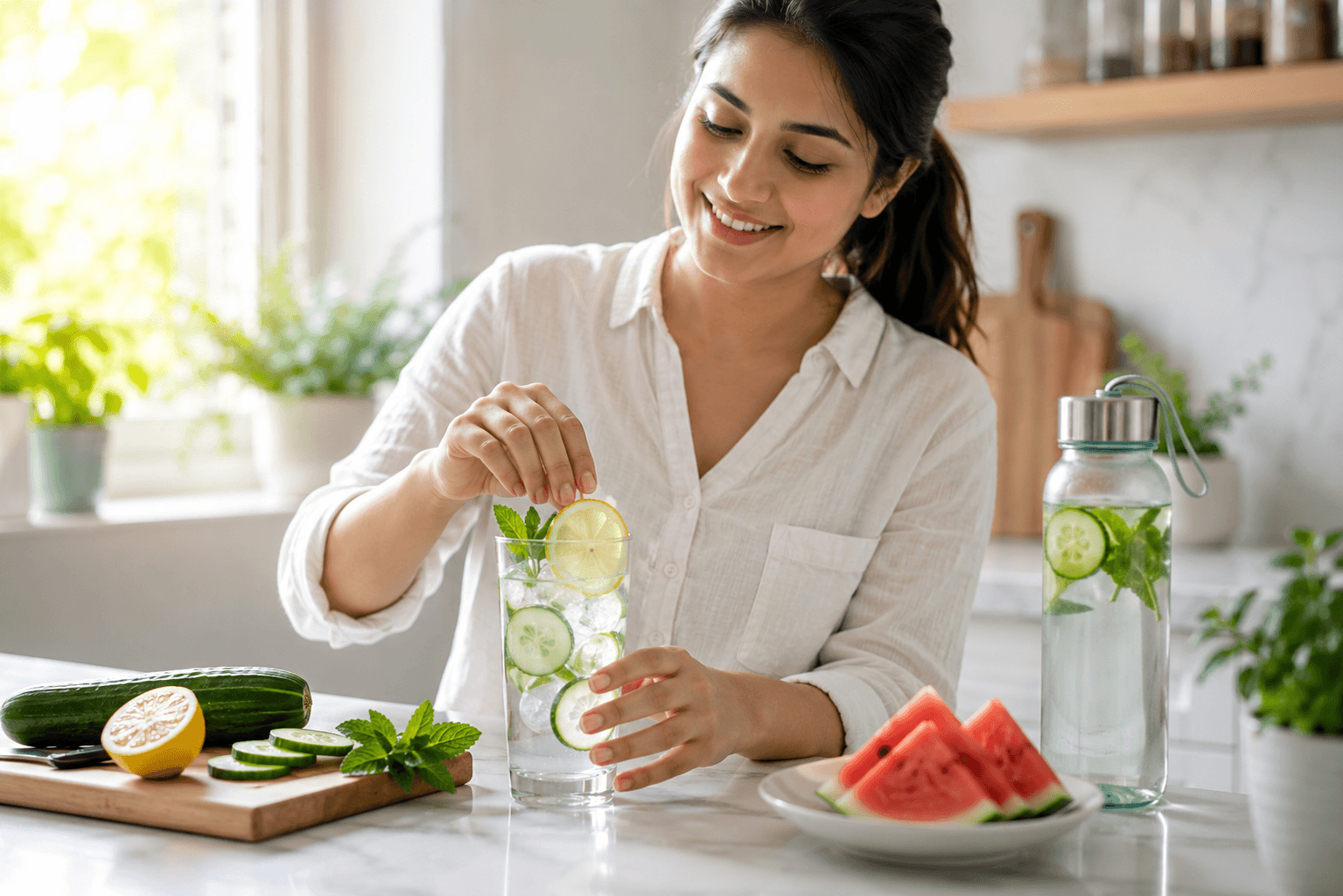
Add a slice of lemon, cucumber or mint to make it more enjoyable
Drink one glass before every meal — this builds a habit automatically
Eat more water rich foods like cucumber, watermelon, tomatoes and yogurt
Track your intake with a simple app for the first week to build awareness
---
The Bottom Line
Forget the 8 glasses rule. Your water needs are personal and depend on your weight, activity level, climate and health
condition. Use the simple formula of 30 to 35 ml per kg of body weight as your starting point, then adjust based on
how active you are and how hot your environment is.
The best tool you already have — check the colour of your urine. Pale and clear means you are doing great. Dark yellow
means reach for a glass of water right now.
Hydration is one of the simplest and most powerful things you can do for your health. It costs nothing and the
benefits are immediate.
Tags